
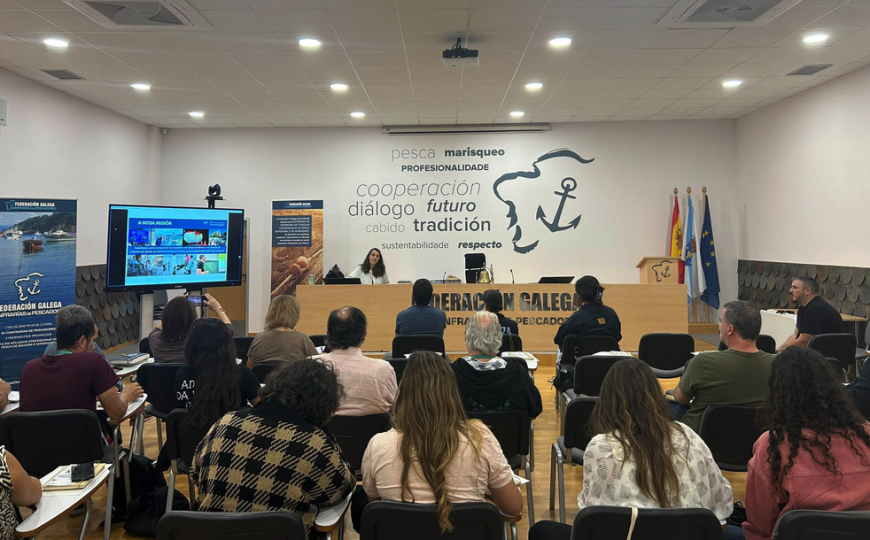
A study by the Marine Research Centre (CIM) at the University of Vigo concludes that shore-based shellfish gathering has fewer resources and fewer alternatives than other forms of Galician small-scale fishing when it comes to adapting to climate change. The results of the Atac project, led by the Future Oceans Lab group, were presented in early October at a conference organised by the Galician Federation of Fishermen’s Guilds.
Catches of fine clams, blonde clams, Japanese clams and cockles fell from around 7.9 million kilos in 2019 to nearly 1.4 million in 2024. Lower incomes, limited capacity for diversification and reduced involvement in decision-making are exacerbating the situation in a sector highly vulnerable to mass mortalities. The fishermen themselves are calling for more adaptive resource management, greater participation, economic viability and better communication with the authorities.
The study confirms that the adaptation of sectors that depend on the sea requires a combination of scientific knowledge, the involvement of local stakeholders and solutions tailored to each activity.
This is the approach CLIRAQUA uses to assess the vulnerability of Atlantic aquaculture to changes in temperature, salinity and water quality, and to promote tools for adaptation and risk prevention.