
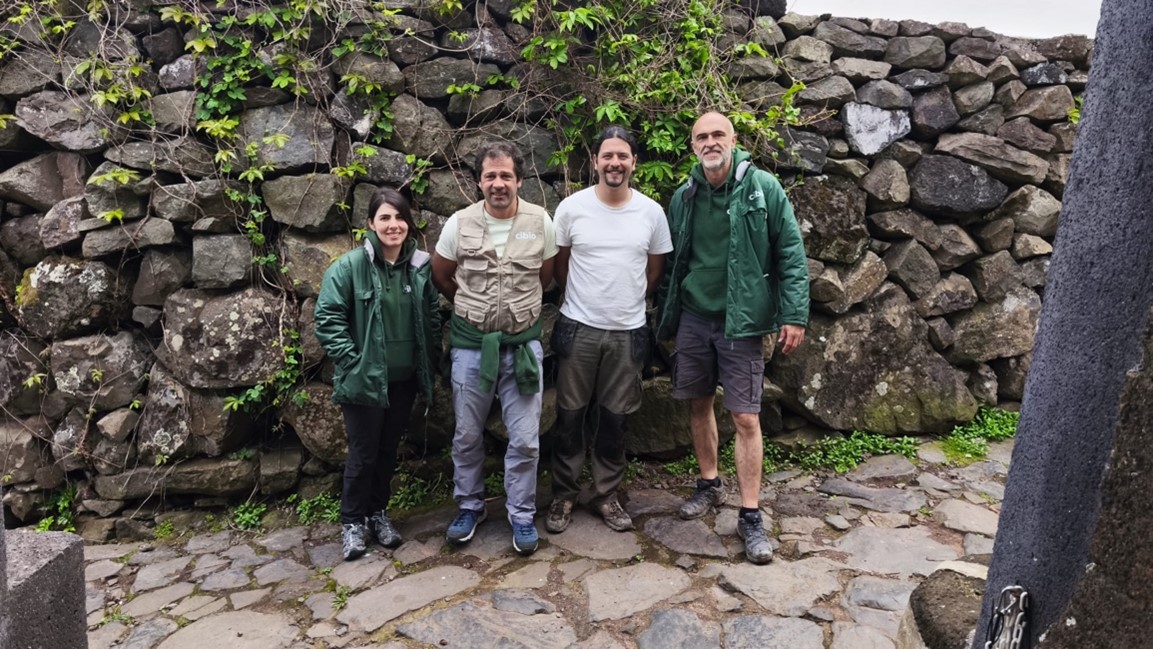
The INTERREG Atlantic Area project CLIRAQUA carried out a scientific field mission between 3 and 6 May at Fajã da Caldeira de Santo Cristo, on São Jorge Island, Azores, reinforcing its commitment to improving climate resilience and environmental monitoring in Atlantic aquaculture ecosystems.
The field campaign was led by the UAc/CIBIO-Açores research team, including Pedro Raposeiro, Gustavo Martins and Rita Cordeiro, with the support of Rafael Martins from the Association of Clam Producers of Fajã de Santo Cristo. The mission also benefited from the collaboration of the Regional Directorate for Environment and Climate Action and the Regional Directorate for Fisheries.
As part of the monitoring activities, the team installed multiparameter sensors to continuously record water temperature, dissolved oxygen, conductivity, and salinity within the lagoon system. Researchers also collected specimens of the clam species Ruditapes decussatus and carried out physicochemical measurements at several locations across the lagoon.
The collected clams were subsequently transported to the laboratories of the Portuguese Institute for the Sea and the Atmosphere (IPMA) in Lisbon, where experimental trials are underway to evaluate the combined impacts of marine heatwaves and salinity changes on this ecologically and economically important species.
These activities contribute to CLIRAQUA’s broader objective of developing innovative adaptation strategies to address the impacts of climate change on aquaculture systems in Atlantic island regions.